Tuesday, October 29, 2013

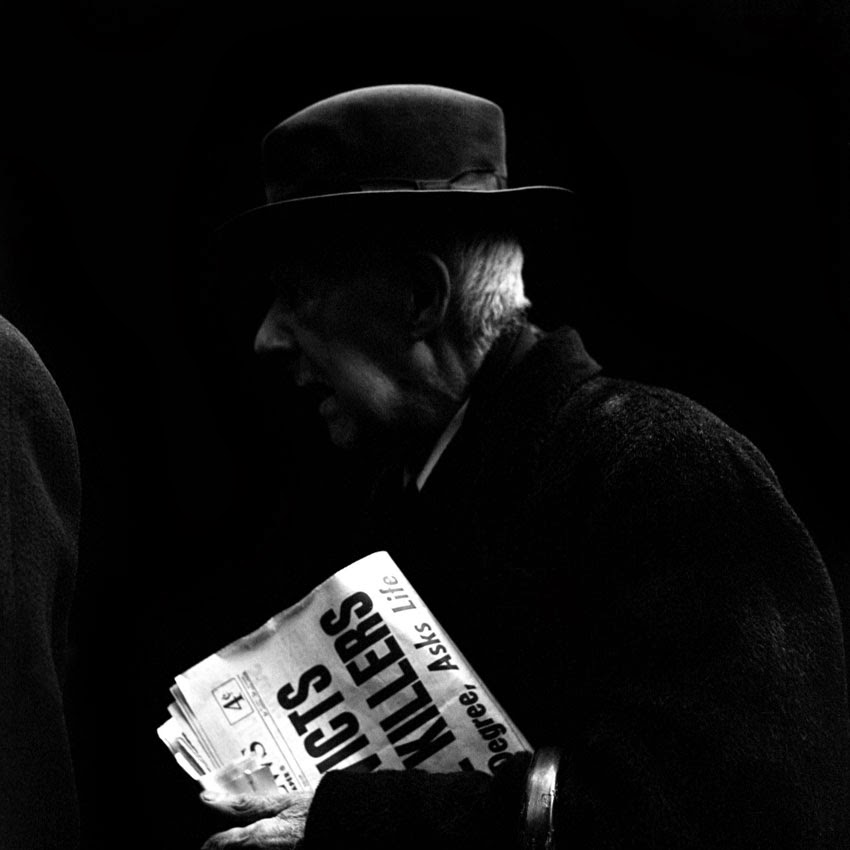
7 Lessons About Photography from W. Eugene Smith


W. Eugene Smith was one of the greats: both a brilliant photographer and a larger-than-life personality. Looking at his photographs, we can learn much about intention, respect, and patience, not to mention seeing a master of the craft at work.

Here is another great article from Eric Kim (sorry I keep goinking your blog posts, buddy!) that takes a closer look at W. Eugene Smith and what he can teach us.

Monday, October 28, 2013

Diary of a Bad Year: A War Correspondent's Dilemma

Kelly McEvers, Photo by Glen Carey
Last Saturday we discussed some of the physical dangers and ethical dilemmas that war photojournalists face.

Kelly McEvers, while not a photographer, was a Middle East correspondent for NPR and faced many of the same situations that confront photojournalists who put themselves in harm's way. In 2012, the "deadliest [year] on record for journalists worldwide," she kept an audio diary reflecting on the danger and allure of being a foreign correspondent in a conflict zone.

It's a powerful, illuminating and harrowing hour-and-a-half of radio, which you can listen to in its entirety here.

Sunday, October 27, 2013

Photojournalism, Documentary, and the "Personal Documentary"

This week, we looked briefly at photographers working with photography as journalism, documentary, and what we called "personal documentary." Here are sample images and links for the photographers that we discussed, and for a few that we ran out of time to look at.


W. Eugene Smith (from "Country Doctor" in Life Magazine)


What do you think? Is there a dividing line between journalism and documentary, between the public and the personal, or are they different shades of the same thing?


Monday, October 21, 2013

Photographs Not Taken


Your reading this week comes from the book Photographs Not Taken, a collection of photographers' essays edited by Will Steacy. The essays are about "moments that never became a picture." They run the gamut from the humorous to the tragic. More often then not, I think photographers prefer to explain themselves through their photos and not their words, but I found reading this book to be at times incredibly moving and I came away from it with a new perspective on what it means to take a photograph.

Originally, I had planned to post some audio excerpts from four of the photographers reading their essays, but the hosting site won't allow me to post them directly on the blog, so if you would like to hear them, they can be found here.


Tuesday, October 8, 2013

Street Photography Composition: Triangles

Josef Koudelka / CZECHOSLOVAKIA. Slovakia. Zehra. 1967. Gypsies
(diagram added by Eric Kim)
Here is another great post from Eric Kim about composition and street photography. In it, he talks about  the use of triangles as a compositional technique, something that we didn't look at in class this week. The article can be found here.

As one of the commenters pointed out, we as photographers have to be careful not to use these compositional techniques as crutches that stifle our freedom and creativity. However, learning how to see them as we look at the world through our viewfinder and as we edit our photos can mean the difference between a good photo and a great photo.

What do you think?

Monday, October 7, 2013

11 Lessons Diane Arbus Can Teach You About Street Photography


Eric Kim posted a great article on Diane Arbus and what she can teach us for our own photography (along with some amazing quotes) that you can read here.

What do you think? Does anything that she says resonate with how you see and photograph the world?

Saturday, October 5, 2013

Street Photography

Want to see more images by the photographers that we discussed in class this week? Here are links to their work:


Are there other street photographers that inspire you? Tell us about them in the comments or share their work on your blog!